Key facts
- Who can apply
- Non-EU (third-country) nationals
- Minimum income
- €42,000 gross a year
- Permit length
- 1 year, renewable to 4 years
- Application fee
- €300 per person
- Tax, first 12 months
- Exempt on authorised remote income
- Tax, thereafter
- 10% flat on that income
Malta offers a dedicated permit for remote workers. The Nomad Residence Permit lets third-country nationals live in Malta legally while they keep working for an employer, their own company or their clients abroad. It is issued and administered by Residency Malta.
Who qualifies
You must be a non-EU, non-EEA, non-Swiss national who can work remotely in one of three ways:
- Employed by a company registered outside Malta, under an employment contract.
- A partner or shareholder in a company registered outside Malta, doing business for it.
- A freelancer or consultant providing services to clients outside Malta, under service contracts.
The requirements
| Requirement | Detail |
|---|---|
| Income | At least €42,000 gross a year (applications from 1 April 2024) |
| Health insurance | Covering all risks in Malta and the EU |
| Home | A valid rental or purchase agreement in Malta |
| Documents | Valid travel document, contracts and proof of income |
| Background | Due diligence clearance by Residency Malta |
| Fee | €300 per applicant and per dependant, non-refundable, at application and renewal |
Residency Malta indicates a processing time of around 60 days from a complete application.
How long the permit lasts
The permit is normally issued for one year and can be renewed — at Residency Malta’s discretion and as long as you still meet the criteria — up to four years in total. It is designed for work done for employers and clients abroad; taking up a job with a Maltese employer follows separate work-permit rules.
How nomads are taxed
For permits issued from 1 January 2024, the Malta Tax and Customs Administration’s guidelines (updated March 2026) set out a specific regime:
| Period | Income from the authorised remote work |
|---|---|
| First 12 months from the permit’s issue | Exempt from Maltese income tax (on request) |
| After 12 months | 10% flat rate |
| Any other income | Ordinary Maltese rules |
Your home-country position matters too: speak to an advisor in both countries before you move.
Finding a home
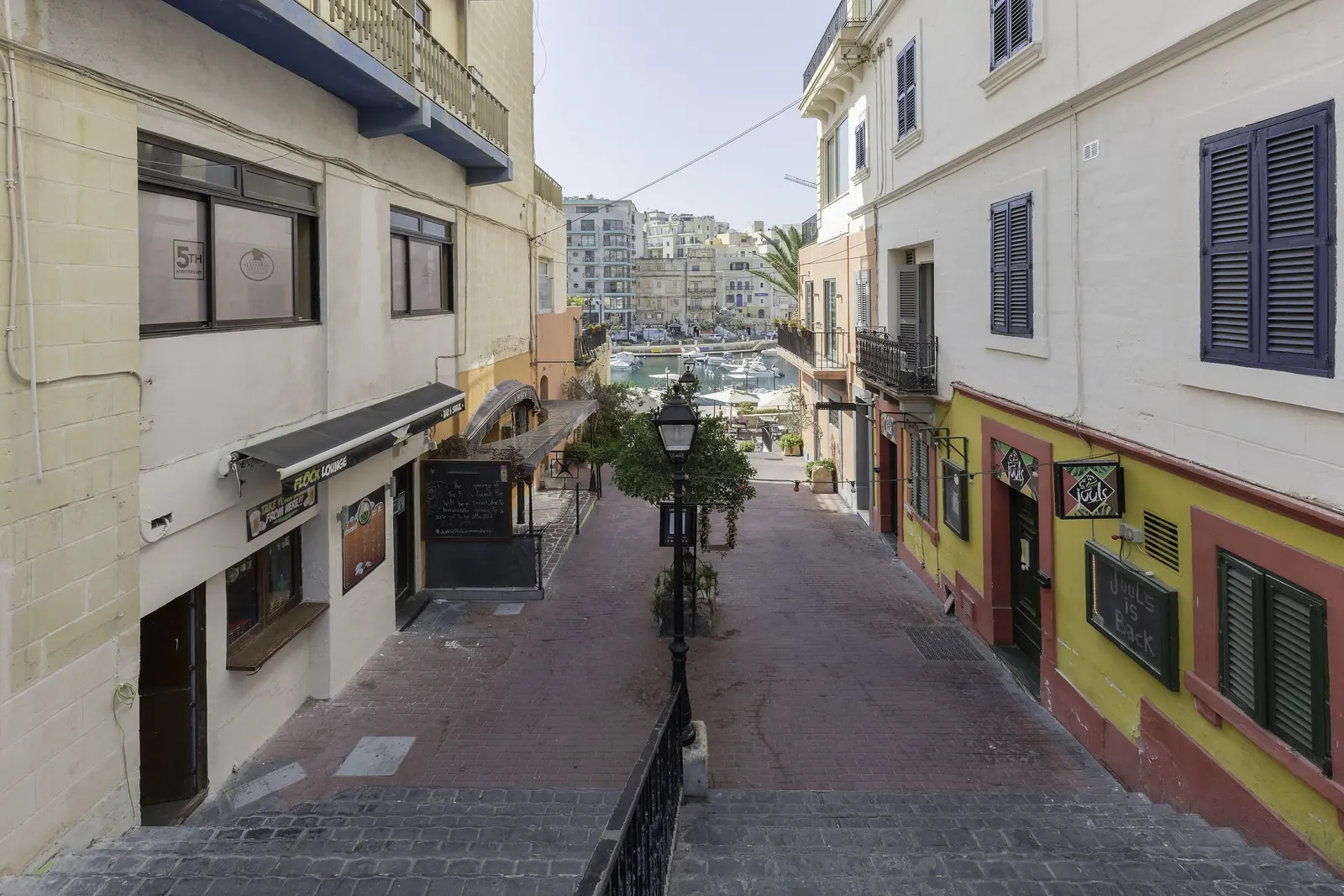
The permit requires a lease or deed from the start, so housing is usually the first practical step. Most nomads rent — a one-bedroom apartment in Sliema, St Julian’s or Gżira and Ta’ Xbiex keeps cafés, co-working and the promenade on your doorstep. Families and those who prefer calm look at Swieqi or Naxxar.
Under Malta’s lease law, residential leases must be in writing and registered with the Housing Authority — read renting in Malta before you sign. If you later decide to buy, non-EU nationals can purchase in a Special Designated Area without an AIP permit.
A stepping stone
Many clients use the nomad permit as a trial run: a year or two in Malta to choose a neighbourhood, schools and a lifestyle, before applying for a long-term route such as the MPRP or Global Residence Programme. Compare every route in Malta residency options.